The creative and digital industries are evolving rapidly, creating strong demand for professionals who can design engaging visuals and user-friendly digital experiences. Employers now look beyond certificates—they prefer candidates who have practical skills, industry-ready portfolios, and experience working on real-world projects.
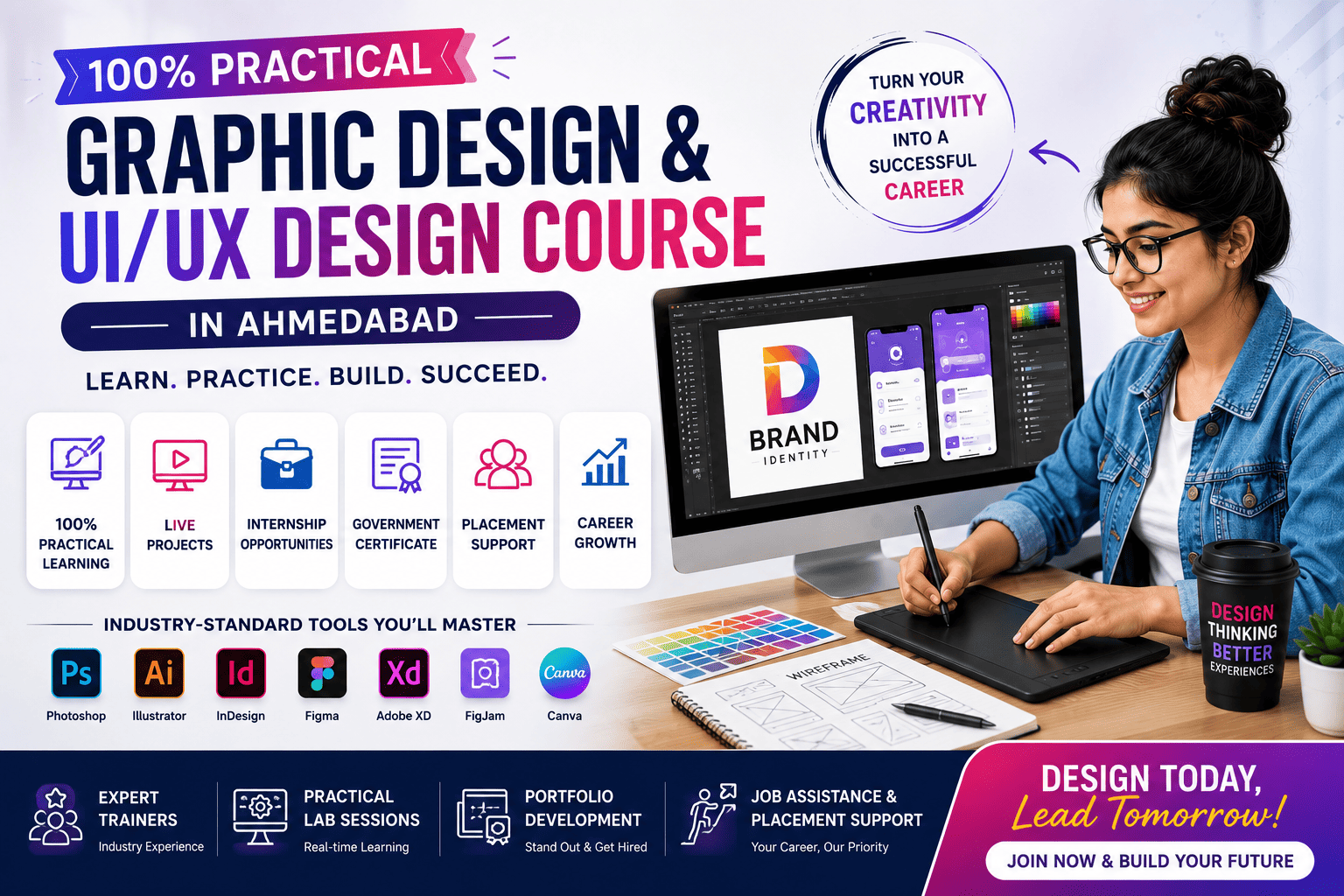
If you’re searching for a 100% Practical Graphic Design & UI/UX Design Course in Ahmedabad, this guide explains why hands-on learning, live projects, internships, government certification, and placement support are essential for building a successful design career in 2026.
Whether you’re a student, graduate, working professional, freelancer, or entrepreneur, a practical training programme can help you gain confidence, develop industry-relevant skills, and prepare for rewarding career opportunities.
Why Practical Learning Is the Future of Design Education
Design is a skill-based profession. While theory provides a foundation, practical application develops the problem-solving, creativity, and technical expertise required by employers.
A practical course enables learners to:
- Build confidence through real assignments
- Apply design principles to real scenarios
- Learn industry workflows
- Receive regular mentor feedback
- Develop an impressive professional portfolio
- Improve employability
Companies generally prefer candidates who can demonstrate their skills through projects rather than relying solely on academic qualifications.
Why Graphic Design and UI/UX Design Are High-Demand Skills in 2026
Businesses increasingly invest in branding, websites, mobile applications, and digital products.
This has created demand across industries including:
- IT Companies
- Product-Based Companies
- Digital Marketing Agencies
- Branding Studios
- Advertising Agencies
- E-commerce Businesses
- Healthcare
- EdTech
- FinTech
- Media Organisations
- Manufacturing Companies
- Startups
Professionals with expertise in both Graphic Design and UI/UX Design often enjoy broader career opportunities.
What Is Graphic Design?
Graphic Design focuses on visual communication that helps brands convey messages effectively.
Graphic Designers create:
- Logo Design
- Brand Identity
- Posters
- Flyers
- Brochures
- Packaging Design
- Social Media Creatives
- Advertisements
- Business Cards
- Marketing Collateral
Strong visual communication helps businesses build brand recognition and customer trust.
What Is UI/UX Design?
UI/UX Design focuses on designing digital experiences that are visually attractive, intuitive, and user-friendly.
Professionals design:
- Mobile Applications
- Websites
- SaaS Platforms
- Software Dashboards
- E-commerce Platforms
- Enterprise Applications
UI (User Interface) enhances the look and feel, while UX (User Experience) improves usability and customer satisfaction.
What You’ll Learn in a 100% Practical Course
A comprehensive programme should combine creative concepts with hands-on software training and project work.
Graphic Design Modules
- Design Principles
- Colour Theory
- Typography
- Branding
- Logo Design
- Print Design
- Packaging Design
- Social Media Design
- Advertising Design
- Visual Communication
UI Design Modules
- Mobile App Design
- Website Design
- Responsive Layouts
- Design Systems
- Accessibility
- Interface Design
UX Design Modules
- Design Thinking
- User Research
- Personas
- User Flows
- Information Architecture
- Wireframing
- Prototyping
- Usability Testing
- UX Case Studies
Industry Software You’ll Master
Professional institutes typically provide practical training in:
- Adobe Photoshop
- Adobe Illustrator
- Adobe InDesign
- Figma
- Adobe XD
- FigJam
- Canva
- AI-Powered Design Tools
Learning industry-standard software prepares students for agency, corporate, and freelance work.
Why Live Projects Matter
Working on live projects helps learners understand client expectations, deadlines, revisions, and collaborative workflows.
Examples of practical projects include:
- Startup Branding
- Restaurant Logo Design
- Packaging Design
- Social Media Campaigns
- Business Website UI
- Mobile App Design
- Dashboard Interfaces
- Landing Pages
- E-commerce User Interfaces
These projects also become valuable additions to a professional portfolio.
Internship Opportunities Build Real-World Experience
Internships bridge the gap between classroom learning and professional work.
Benefits include:
- Exposure to industry practices
- Client communication experience
- Team collaboration
- Time management
- Problem-solving skills
- Understanding project lifecycles
- Stronger resume
- Better job readiness
Even short internships can significantly enhance a candidate’s confidence and practical knowledge.
Build a Portfolio That Impresses Employers
A portfolio is one of the most important assets for a designer.
A strong portfolio should include:
- Branding Projects
- Logo Collections
- Website Designs
- Mobile App Interfaces
- Wireframes
- Interactive Prototypes
- UX Case Studies
- Social Media Campaigns
- Print Design Samples
Employers often evaluate portfolios before scheduling interviews.
Government Certification – Why It Adds Value
A government-recognised certification demonstrates structured learning and can strengthen your professional profile.
Potential benefits include:
- Greater credibility
- Improved resume value
- Better internship opportunities
- Enhanced employer confidence
- Recognition across industries
Certification is most effective when supported by practical skills and a strong portfolio.
Placement Support That Helps Launch Your Career
Quality institutes typically offer career-focused services such as:
- Resume Building
- Portfolio Review
- Mock Interviews
- LinkedIn Profile Optimisation
- Career Counselling
- Internship Assistance
- Placement Support
- Freelancing Guidance
Career support helps students prepare for recruitment processes and professional opportunities.
Career Opportunities After Completing the Course
A combined Graphic Design and UI/UX programme opens opportunities in multiple industries.
Popular job roles include:
- Graphic Designer
- UI Designer
- UX Designer
- Product Designer
- Visual Designer
- Brand Designer
- Web Designer
- Mobile App Designer
- UX Researcher
- Creative Designer
- Marketing Designer
- Freelance Designer
Salary Expectations in India (2026)
Salary depends on experience, skills, portfolio quality, company, and location.
| Experience | Approximate Annual Salary |
|---|---|
| Fresher | ₹3–6 LPA |
| 1–3 Years | ₹6–10 LPA |
| 3–5 Years | ₹10–18 LPA |
| Senior Professionals | ₹18 LPA+ |
Professionals who continuously improve their skills and portfolios often enjoy faster career progression.
Why Ahmedabad Is an Excellent Place to Learn Design
Ahmedabad has emerged as a growing centre for technology, startups, and creative businesses.
Students can benefit from opportunities in:
- Software Companies
- Digital Agencies
- Branding Firms
- Advertising Agencies
- Product Companies
- E-commerce Businesses
- Manufacturing Organisations
- Media Houses
This ecosystem supports internships, networking, and career development.
Who Should Join This Course?
This programme is suitable for:
- Students after Class 10 or 12
- College Students
- Graduates
- Working Professionals
- Career Changers
- Freelancers
- Entrepreneurs
- Marketing Professionals
- Content Creators
- Small Business Owners
No previous design experience is required for beginner-friendly courses.
How to Choose the Best Graphic Design & UI/UX Institute in Ahmedabad
Before enrolling, compare institutes based on:
✅ Updated Industry Curriculum
✅ Experienced Trainers
✅ 100% Practical Learning
✅ Live Industry Projects
✅ Internship Opportunities
✅ Portfolio Development
✅ Government Certification
✅ Modern Software Training
✅ Placement Assistance
✅ Career Guidance
Choose a programme that emphasises practical learning and real-world experience rather than theory alone.
Frequently Asked Questions (FAQs)
1. What makes a Graphic Design and UI/UX course truly practical?
A practical course includes live projects, software training, portfolio development, mentor feedback, internships, and hands-on assignments rather than focusing only on classroom theory.
2. Why are live projects important?
Live projects help students apply their knowledge, understand client requirements, build confidence, and create a professional portfolio that employers value.
3. Is an internship necessary?
While not always mandatory, internships provide valuable industry exposure, teamwork experience, and practical skills that improve job readiness.
4. Which software should I learn?
Essential tools include Adobe Photoshop, Illustrator, InDesign, Figma, Adobe XD, FigJam, Canva, and AI-assisted design tools.
5. Does a government certificate guarantee a job?
No. Certification strengthens your profile, but employers also evaluate your portfolio, practical skills, communication, and problem-solving abilities.
6. Is placement support available after the course?
Many institutes offer resume assistance, portfolio reviews, interview preparation, internship support, and placement guidance. The scope of support varies by institute.
7. Can beginners join this course?
Yes. Most beginner-friendly programmes start with design fundamentals before progressing to advanced concepts and practical projects.
8. Can I work as a freelancer after completing the course?
Yes. A strong portfolio and practical experience can help you secure freelance projects in branding, UI/UX, website design, social media, and digital marketing.
Conclusion
A 100% Practical Graphic Design & UI/UX Design Course in Ahmedabad offers much more than classroom instruction. By combining live industry projects, internships, portfolio development, government-recognised certification, and career support, learners gain the practical skills employers seek.
For students and working professionals planning a creative career in 2026, choosing a programme that prioritises hands-on learning, industry-standard software, and real-world experience can significantly improve confidence, employability, and long-term career growth.