The demand for skilled UI/UX Designers has grown significantly as businesses continue to invest in websites, mobile applications, SaaS platforms, and digital products. Companies today are looking for professionals who can create user-friendly experiences, solve real-world design problems, and work confidently with modern design tools and emerging AI technologies.
While many training programs focus heavily on theory, employers increasingly value practical experience, portfolio quality, and the ability to apply design thinking to real projects. A 100% practical UI/UX Design course that includes Graphic Design, Generative AI tools, live projects, internship opportunities, and placement assistance can help students become job-ready.
This complete guide explains what to expect from a practical UI/UX Design course in Ahmedabad, including the syllabus, software, career opportunities, salaries, and how to choose the right institute.
Why UI/UX Design Is One of the Best Career Choices in 2026
Digital products are becoming more complex, making user experience a key competitive advantage. Organizations across industries hire UI/UX Designers to create intuitive and engaging digital experiences.
Industries hiring UI/UX professionals include:
- IT Companies
- Product-Based Companies
- SaaS Businesses
- FinTech
- Healthcare
- E-commerce
- EdTech
- Digital Marketing Agencies
- Startups
As technology continues to evolve, the need for skilled designers remains strong.
What Makes a Course 100% Practical?
A practical course emphasizes learning by doing rather than memorizing concepts.
Students should spend most of their training on:
- Hands-on Design Exercises
- Real Client Projects
- Live Industry Assignments
- UI Case Studies
- Wireframing
- Interactive Prototypes
- Team Projects
- Portfolio Development
Practical learning helps students build confidence and prepares them for professional environments.
What You’ll Learn in a Practical UI/UX Design Course
Module 1 – Design Fundamentals
Develop a strong creative foundation by learning:
- Design Principles
- Color Theory
- Typography
- Layout Design
- Visual Hierarchy
- Composition
- Accessibility Basics
Module 2 – Graphic Design
Graphic Design strengthens your visual communication skills.
Topics include:
- Logo Design
- Branding
- Social Media Creatives
- Print Design
- Marketing Materials
- Visual Storytelling
Software
- Adobe Photoshop
- Adobe Illustrator
- Adobe InDesign
- Canva
Module 3 – UI Design
Learn how to create visually appealing interfaces for websites and mobile applications.
Topics include:
- Responsive Layouts
- Design Systems
- Components
- Icons
- Mobile UI
- Web UI
- Dashboard Design
Module 4 – UX Design
Understand how users interact with digital products.
Topics include:
- User Research
- User Personas
- Information Architecture
- User Journey Mapping
- Wireframing
- Interactive Prototyping
- Usability Testing
Module 5 – Website Design Basics
Gain an understanding of how designs are implemented.
Topics include:
- Responsive Web Design
- WordPress
- HTML Basics
- CSS Basics
- Landing Pages
- Website Navigation
Module 6 – Generative AI Tools
Learn how AI supports modern creative workflows.
Students explore:
- AI Image Generation
- UX Writing Assistance
- Design Brainstorming
- Prompt Writing
- Workflow Automation
- AI Content Support
AI tools enhance productivity while complementing—not replacing—creative skills.
Industry Software You’ll Learn
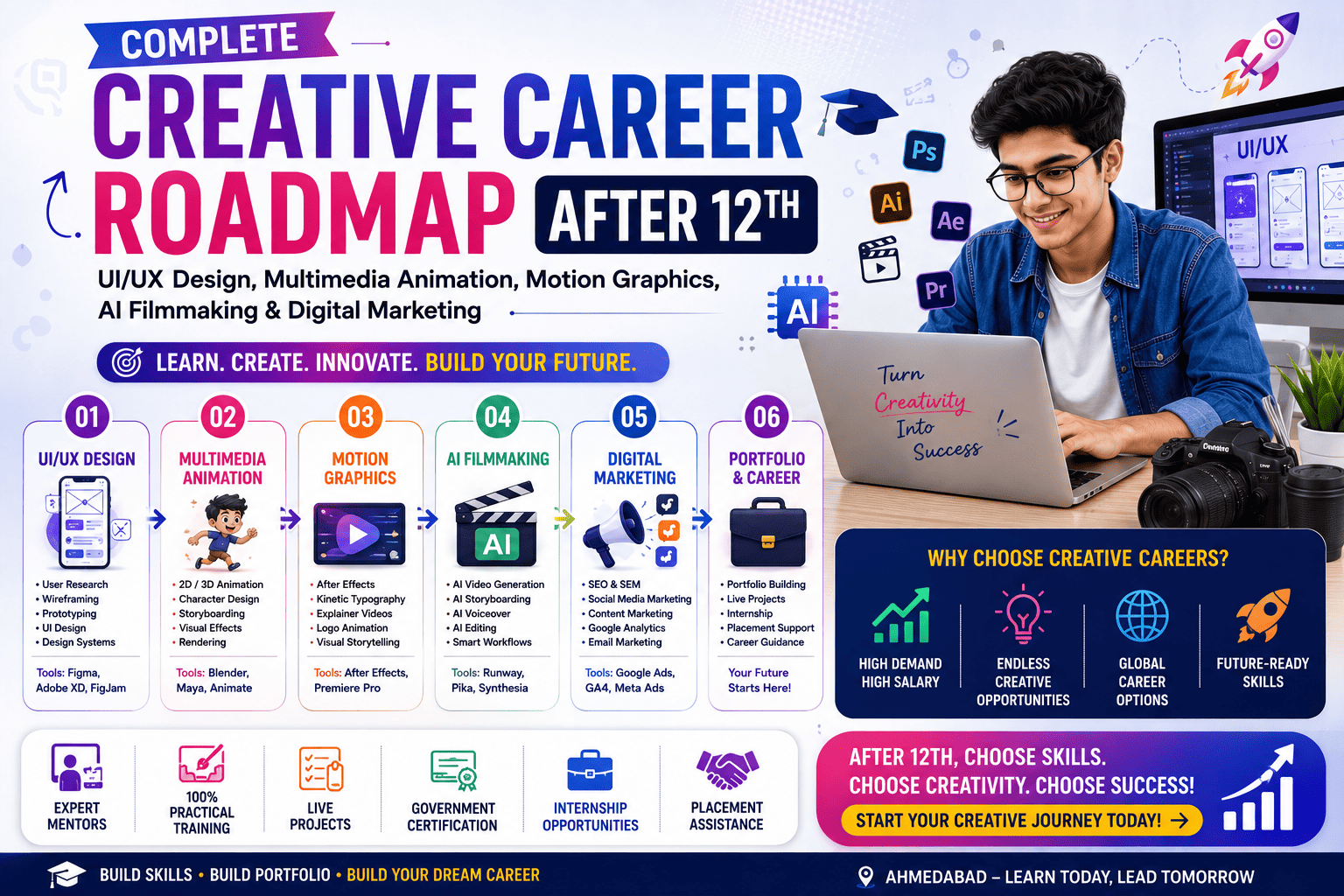
UI/UX Design
- Figma
- Adobe XD
- FigJam
Graphic Design
- Adobe Photoshop
- Adobe Illustrator
- Adobe InDesign
Website Design
- WordPress
- Elementor
AI Tools
- ChatGPT
- Adobe Firefly
- Microsoft Copilot
- Canva AI
Using industry-standard software prepares students for professional work environments.
Why Live Projects Matter
Live projects allow students to apply classroom knowledge to practical situations.
Benefits include:
- Real Design Experience
- Problem-Solving Skills
- Team Collaboration
- Client Communication
- Portfolio Enhancement
- Better Interview Preparation
Employers often prefer candidates who have experience working on realistic projects.
Internship Opportunities
Internships provide exposure to professional workflows and help students understand industry expectations.
Students may gain experience in:
- UI Design
- UX Research
- Graphic Design
- Website Projects
- Digital Marketing Campaigns
- Creative Team Collaboration
Internships also strengthen resumes and portfolios.
Portfolio Development
A professional portfolio is one of the most important requirements for UI/UX careers.
A strong portfolio should include:
- UI/UX Case Studies
- Mobile App Interfaces
- Website Designs
- Branding Projects
- User Research Documentation
- Interactive Prototypes
- AI-Assisted Design Concepts
Quality is more important than the number of projects.
Placement Assistance
Many career-oriented institutes provide placement support through:
- Resume Building
- Portfolio Reviews
- Mock Interviews
- Career Counseling
- Internship Referrals
- Interview Preparation
- Employer Connections
Placement assistance improves job readiness, though final hiring depends on individual performance and employer requirements.
Government Certification
Government-recognized certification can strengthen your professional profile by demonstrating structured learning.
Benefits include:
- Resume Enhancement
- Professional Recognition
- Internship Opportunities
- Career Credibility
Certification is most effective when paired with practical skills and a strong portfolio.
Career Opportunities After Course Completion
Graduates can pursue roles such as:
- UI Designer
- UX Designer
- Product Designer
- Graphic Designer
- Website Designer
- Visual Designer
- Creative Designer
- UX Research Assistant
- Digital Product Designer
- Freelance Designer
These roles are available across technology companies, startups, agencies, and product organizations.
Salary Expectations in India (2026)
Actual salaries depend on skills, portfolio quality, experience, employer, and location.
| Experience Level | Approximate Annual Salary |
|---|---|
| Fresher | ₹3–6 LPA |
| 1–3 Years | ₹6–10 LPA |
| 3–5 Years | ₹10–18 LPA |
| Senior Professionals | ₹18 LPA+ |
Professionals who continue upgrading their skills and building strong portfolios often progress more quickly.
Why Ahmedabad Is a Great Place to Learn UI/UX Design
Ahmedabad offers a growing ecosystem of:
- IT Companies
- Software Firms
- Product Startups
- Branding Agencies
- Digital Marketing Companies
- Web Development Firms
- Creative Studios
Students benefit from internships, networking opportunities, and increasing demand for digital talent.
How to Choose the Right UI/UX Design Institute
When comparing institutes, consider whether they offer:
- 100% Practical Training
- Live Projects
- Updated Industry Curriculum
- Experienced Faculty
- Portfolio Development
- Internship Opportunities
- Placement Assistance
- Government-Recognized Certification
- AI Tools Training
- Career Guidance
A balanced program that combines technical knowledge, creativity, and practical application provides the best preparation for industry roles.
Who Should Join This Course?
This course is suitable for:
- Students after Class 10 or 12
- College Students
- Graduates
- Working Professionals
- Career Changers
- Graphic Designers
- Website Designers
- Freelancers
- Entrepreneurs
- Creative Professionals
No prior coding experience is required for most beginner-level UI/UX programs.
Frequently Asked Questions (FAQs)
1. Why is practical training important in UI/UX Design?
Practical training helps students apply design principles through real projects, build problem-solving skills, and create a portfolio that demonstrates their abilities to employers.
2. What are live projects in a UI/UX course?
Live projects involve working on realistic design challenges or client-inspired assignments, giving students hands-on experience with industry workflows.
3. How do Graphic Design and UI/UX Design work together?
Graphic Design strengthens visual communication, branding, typography, and layout skills, while UI/UX Design focuses on usability, user research, and interactive digital experiences.
4. Why should I learn Generative AI tools?
Generative AI tools assist with brainstorming, UX writing, image creation, and workflow automation, helping designers work more efficiently while enhancing creativity.
5. Does placement assistance guarantee a job?
No. Placement assistance provides career support such as interview preparation and employer connections, but hiring decisions depend on your skills, portfolio, interview performance, and employer requirements.
6. Is government certification useful?
Yes. A government-recognized certificate adds credibility to your resume, but employers also assess your practical skills, portfolio, and problem-solving abilities.
7. Do I need coding to become a UI/UX Designer?
No. Coding is not mandatory for most UI/UX roles, although basic knowledge of HTML and CSS can improve collaboration with developers.
8. Why is Ahmedabad a good city for UI/UX training?
Ahmedabad has a growing network of IT companies, startups, creative agencies, and digital businesses, offering valuable opportunities for internships, live projects, and career growth.
Conclusion
A 100% practical UI/UX Design course provides much more than classroom learning. By combining UI/UX Design, Graphic Design, Website Design basics, Generative AI tools, live projects, portfolio development, government-recognized certification, internships, and placement assistance, students can build a well-rounded skill set that aligns with current industry expectations.
For anyone planning a creative career in 2026, choosing a course that emphasizes hands-on experience, continuous learning, and real-world problem-solving is one of the best ways to prepare for opportunities in technology, product design, digital marketing, and creative industries.