Choosing the right career after completing Class 12 is one of the most important decisions in a student’s life. While traditional degree programs remain valuable, today’s employers increasingly seek candidates with practical, industry-ready skills that align with the digital economy.
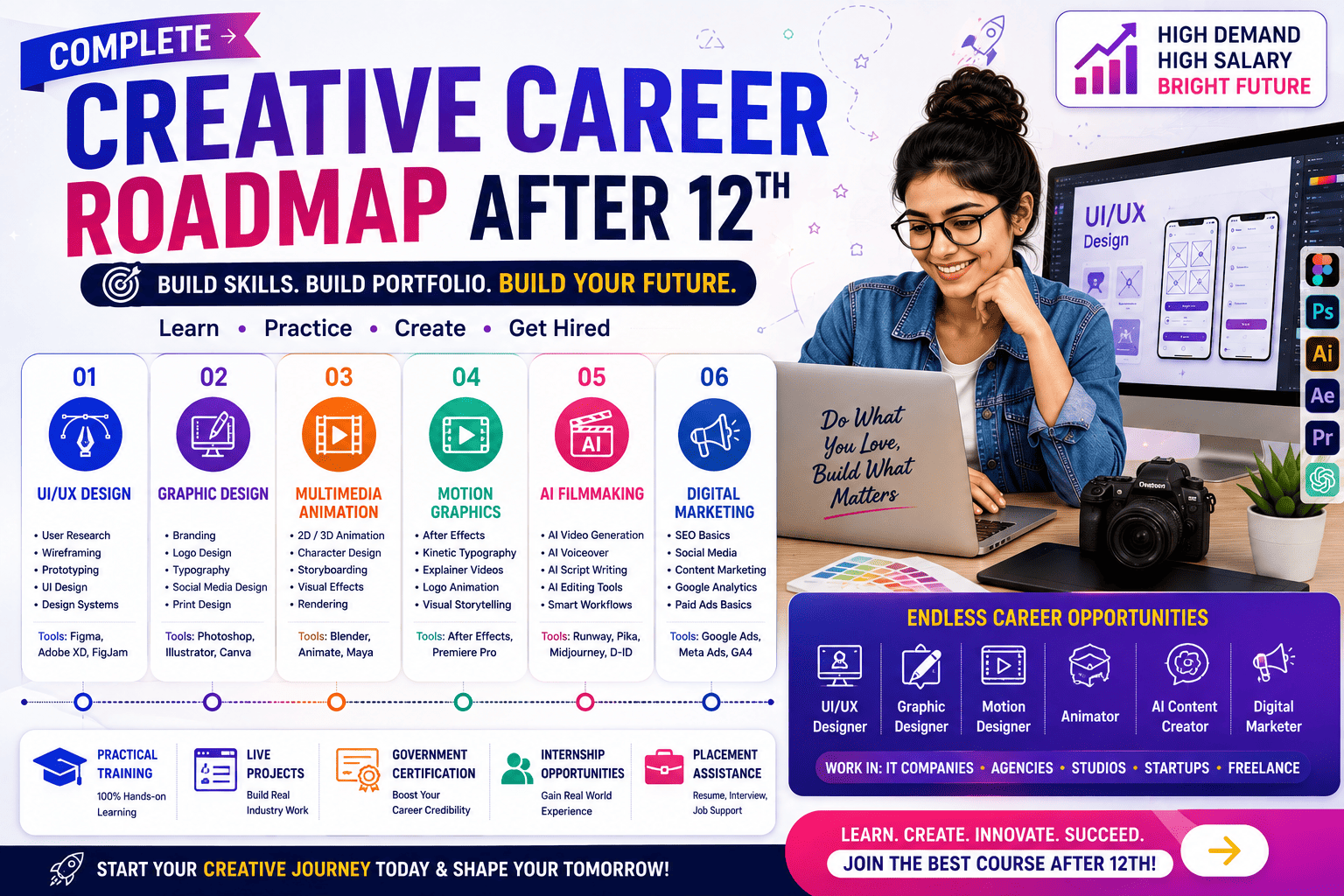
Creative industries are growing rapidly, creating exciting opportunities in UI/UX Design, Graphic Design, Multimedia Animation, Motion Graphics, AI Filmmaking, Website Design & Development, Digital Marketing, and Generative AI. Students who combine these skills with practical training, a strong portfolio, and recognized certification can pursue careers across technology, media, advertising, entertainment, and startups.
This complete 2026 career roadmap explains how to build a successful creative career after the 12th standard, what skills to learn, expected salaries, future job opportunities, and how to choose the right training institute.
Why Creative Careers Are Growing in 2026
Businesses across every industry are investing in digital products, online marketing, video content, and immersive user experiences. As a result, creative professionals are in demand for designing websites, mobile apps, animations, advertisements, and AI-powered content.
Industries hiring creative professionals include:
- IT Companies
- Software Development Firms
- Digital Marketing Agencies
- Advertising Agencies
- Media & Entertainment
- Gaming Companies
- E-commerce Platforms
- Healthcare
- Education Technology
- FinTech
- Startups
- Manufacturing Companies
The creative economy continues to expand, offering diverse career paths for students with practical skills.
Why UI/UX Design Should Be Your First Priority
Among all creative disciplines, UI/UX Design has emerged as one of the fastest-growing and highest-demand careers.
UI/UX Designers create user-friendly digital experiences for:
- Mobile Applications
- Websites
- Software Products
- Smart Devices
- E-commerce Platforms
- Enterprise Applications
Skills You’ll Learn
- User Research
- Wireframing
- Prototyping
- Design Thinking
- User Flows
- Design Systems
- Accessibility
- Usability Testing
Industry Software
- Figma
- Adobe XD
- FigJam
- Prototyping Tools
Because UI/UX Design combines creativity with technology, it offers strong long-term career prospects.
Step 2: Learn Graphic Design
Graphic Design forms the foundation of visual communication and complements UI/UX Design.
Core Topics
- Branding
- Logo Design
- Typography
- Color Theory
- Social Media Design
- Packaging Design
- Print Design
- Advertising Creatives
Software
- Adobe Photoshop
- Adobe Illustrator
- Adobe InDesign
- Canva
Graphic Design enhances your ability to create visually compelling interfaces and marketing materials.
Step 3: Learn Website Design & Development
Understanding how websites are designed and built helps creative professionals collaborate effectively with developers.
Learn About
- Responsive Website Design
- Landing Pages
- WordPress
- HTML Basics
- CSS Basics
- Website Structure
- User-Friendly Navigation
Website Design strengthens your UI/UX knowledge and expands career opportunities.
Step 4: Explore Multimedia Animation
Animation is used across advertising, entertainment, education, gaming, and social media.
Topics Include
- 2D Animation
- 3D Animation Basics
- Character Animation
- Storyboarding
- Visual Storytelling
- Motion Design Principles
Animation skills help create engaging visual experiences for digital platforms.
Step 5: Learn Motion Graphics
Motion Graphics combine design with animation to create dynamic visual content.
Professionals work on:
- Promotional Videos
- Explainer Videos
- Title Sequences
- Social Media Videos
- Brand Animations
- Digital Advertisements
Motion Graphics are widely used by agencies, startups, and media companies.
Step 6: Learn AI Filmmaking
Artificial Intelligence is transforming video production.
Modern AI Filmmaking includes:
- AI Video Generation
- AI Voiceovers
- AI Editing Assistance
- AI Storyboarding
- AI Script Support
- AI Image Generation
Learning AI-powered creative workflows prepares students for the future of content creation.
Step 7: Learn Digital Marketing
Digital Marketing enables creative professionals to understand how design influences business growth.
Topics include:
- Search Engine Optimization (SEO)
- Content Marketing
- Social Media Marketing
- Email Marketing
- Performance Marketing Basics
- Google Analytics
- Conversion Optimization
A basic understanding of Digital Marketing helps designers create user-focused campaigns and improve online engagement.
Step 8: Learn Generative AI Tools
Generative AI is becoming an essential part of creative workflows.
Students should learn how to use AI responsibly for:
- Design Ideation
- Image Generation
- Content Creation
- Presentation Design
- UX Copywriting
- Creative Brainstorming
- Workflow Automation
AI enhances productivity while allowing designers to focus on creativity and problem-solving.
Recommended Learning Roadmap
Phase 1 – Design Fundamentals
- Design Principles
- Color Theory
- Typography
- Visual Communication
Phase 2 – UI/UX Design
- User Research
- Wireframing
- Prototyping
- Design Systems
Phase 3 – Graphic Design
- Branding
- Print Design
- Digital Creatives
- Logo Design
Phase 4 – Website Design
- Responsive Design
- WordPress
- HTML & CSS Basics
Phase 5 – Multimedia & Motion Graphics
- Animation Principles
- Motion Graphics
- Storytelling
Phase 6 – AI & Digital Marketing
- Generative AI Tools
- SEO Basics
- Social Media Marketing
- Analytics
This progression helps students build complementary skills without becoming overwhelmed.
Build a Professional Portfolio
A strong portfolio is one of the most important assets for creative professionals.
Include:
- UI/UX Case Studies
- Website Designs
- Branding Projects
- Logo Collections
- Motion Graphics
- Animation Projects
- AI-Assisted Designs
- Marketing Campaign Creatives
Employers often evaluate portfolios before conducting interviews.
Internship & Practical Learning
Choose a training institute that provides:
- 100% Practical Learning
- Live Industry Projects
- Internship Opportunities
- Portfolio Development
- Mentorship
- Placement Assistance
Hands-on experience builds confidence and improves employability.
Government Certification
Government-recognized certification can add value to your resume by demonstrating structured training.
Benefits include:
- Professional Recognition
- Improved Resume
- Better Internship Opportunities
- Industry Credibility
Certification is most effective when combined with practical skills and a strong portfolio.
Career Opportunities
After completing this learning path, graduates can pursue roles such as:
- UI Designer
- UX Designer
- Product Designer
- Graphic Designer
- Motion Graphic Designer
- Multimedia Artist
- Animator
- Website Designer
- Digital Marketing Executive
- Creative Designer
- AI Content Creator
- Visual Designer
- Video Editor
- Freelance Creative Professional
Salary Expectations in India (2026)
Approximate salary ranges vary based on skills, experience, portfolio, and employer.
| Role | Approximate Annual Salary |
|---|---|
| UI/UX Designer | ₹3–6 LPA (Fresher) |
| Graphic Designer | ₹2.5–5 LPA |
| Website Designer | ₹3–5 LPA |
| Motion Graphic Designer | ₹3–6 LPA |
| Multimedia Animator | ₹3–6 LPA |
| Digital Marketing Executive | ₹3–6 LPA |
Professionals who develop expertise across multiple creative domains often have broader career opportunities and stronger long-term earning potential.
Why Ahmedabad Is an Excellent Place to Build a Creative Career
Ahmedabad has become a growing hub for:
- IT Companies
- Product Startups
- Digital Marketing Agencies
- Branding Studios
- Animation Companies
- Media Houses
- Software Firms
Students benefit from internships, industry exposure, networking opportunities, and a rapidly expanding creative ecosystem.
Who Should Follow This Career Roadmap?
This roadmap is ideal for:
- Students after Class 12
- Students after Class 10
- College Students
- Graduates
- Working Professionals
- Career Changers
- Freelancers
- Entrepreneurs
- Content Creators
No prior design or coding experience is required for most beginner-level courses.
Frequently Asked Questions (FAQs)
1. Which creative course is best after the 12th?
UI/UX Design is one of the strongest choices due to its high demand, competitive salaries, and opportunities across technology, product design, and digital businesses. Combining it with Graphic Design, Website Design, and Digital Marketing can further broaden career prospects.
2. Can I learn UI/UX Design after the 12th without coding?
Yes. Most beginner-level UI/UX courses focus on user research, design principles, wireframing, and prototyping rather than programming.
3. Why should I learn Graphic Design with UI/UX Design?
Graphic Design improves visual communication, branding, typography, and layout skills, which enhance interface design and portfolio quality.
4. Is Multimedia Animation a good career?
Yes. Multimedia Animation is widely used in entertainment, advertising, gaming, education, and digital media, offering diverse career opportunities.
5. What are Motion Graphics used for?
Motion Graphics are used for promotional videos, explainer videos, advertisements, social media campaigns, presentations, and digital storytelling.
6. How does Generative AI help creative professionals?
Generative AI supports brainstorming, image creation, video production, UX writing, and workflow automation, helping creatives work more efficiently.
7. Does government certification guarantee placement?
No. Certification demonstrates structured learning, but employers also assess practical skills, portfolios, communication, and problem-solving abilities.
8. Why is Ahmedabad a good place to study creative courses?
Ahmedabad has a growing ecosystem of IT companies, startups, branding agencies, digital marketing firms, and creative studios that provide practical exposure and career opportunities.
Conclusion
The future of creative careers belongs to professionals who combine multiple complementary skills. Starting with UI/UX Design and gradually adding Graphic Design, Website Design & Development, Multimedia Animation, Motion Graphics, AI Filmmaking, Digital Marketing, and Generative AI creates a well-rounded skill set that is highly valued by employers.
For students completing Class 12 in 2026, focusing on practical learning, live projects, portfolio development, government-recognized certification, internships, and continuous skill enhancement can pave the way for rewarding careers across technology, media, advertising, and digital innovation. By following a structured learning roadmap and staying updated with industry trends, aspiring creative professionals can confidently prepare for the opportunities of the future.