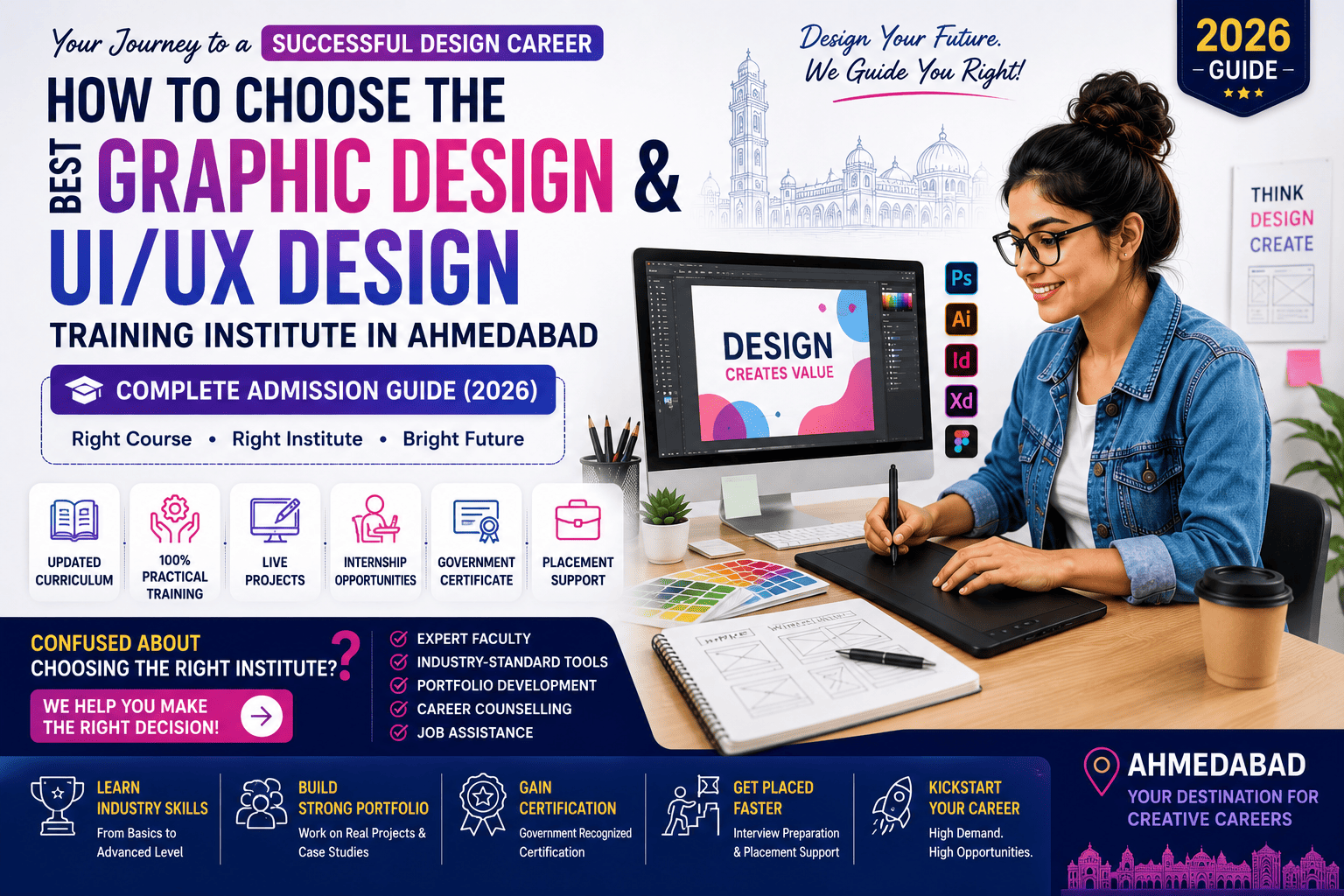
The demand for skilled Graphic Designers and UI/UX Designers continues to grow as businesses invest in branding, websites, mobile applications, and digital products. However, choosing the right training institute is one of the most important decisions for building a successful career.
With many institutes offering design courses, students often find it difficult to compare curriculum, practical training, software, certification, internships, and placement support.
This complete admission guide explains how to choose the best Graphic Design & UI/UX Design Training Institute in Ahmedabad in 2026. You’ll learn what to evaluate before enrolling, what skills employers expect, and how to select a course that prepares you for real industry opportunities.
Why Graphic Design & UI/UX Design Are Among the Best Career Choices in 2026
The digital economy has created a growing need for professionals who can combine creativity with technology.
Graphic Designers help businesses build strong visual identities, while UI/UX Designers create user-friendly digital experiences for websites, mobile apps, and software.
Industries hiring include:
- IT Companies
- Product-Based Companies
- Digital Marketing Agencies
- Branding Agencies
- Advertising Companies
- E-commerce Platforms
- Healthcare
- FinTech
- EdTech
- Startups
- Media Houses
- Manufacturing Companies
Learning both Graphic Design and UI/UX Design gives students access to a wider range of career opportunities.
Why Choosing the Right Institute Matters
A high-quality institute does more than teach software. It helps students build practical skills, confidence, and professional portfolios.
The right institute should focus on:
- Practical Learning
- Industry-Relevant Curriculum
- Live Projects
- Portfolio Development
- Internship Opportunities
- Career Guidance
- Placement Support
- Industry Mentorship
The quality of training often has a greater impact on career success than the duration of the course.
What Should a Modern Graphic Design & UI/UX Course Include?
An industry-oriented course should balance creative concepts with practical application.
Graphic Design Modules
- Design Principles
- Colour Theory
- Typography
- Branding
- Logo Design
- Print Design
- Packaging Design
- Advertising Design
- Social Media Design
- Visual Communication
UI Design Modules
- Mobile App Design
- Website Design
- Responsive Layouts
- Design Systems
- Accessibility
- Interface Design
UX Design Modules
- Design Thinking
- User Research
- User Personas
- Customer Journey Mapping
- Information Architecture
- Wireframing
- Prototyping
- Usability Testing
- UX Case Studies
Industry Software You Should Learn
Choose an institute that provides hands-on training in industry-standard tools.
Essential software includes:
- Adobe Photoshop
- Adobe Illustrator
- Adobe InDesign
- Figma
- Adobe XD
- FigJam
- Canva
- AI-Powered Design Tools
Practical software training prepares students for agency, startup, corporate, and freelance careers.
10 Factors to Consider Before Taking Admission
1. Updated Industry Curriculum
Ensure the syllabus reflects current design trends, modern workflows, accessibility standards, and AI-assisted design tools.
2. 100% Practical Learning
A strong programme should prioritise hands-on assignments over lengthy theoretical lectures.
Look for:
- Lab Sessions
- Practical Exercises
- Design Challenges
- Mentor Reviews
3. Live Industry Projects
Working on real projects helps students understand client expectations and professional workflows.
Examples include:
- Branding Projects
- Website UI Design
- Mobile App Interfaces
- Packaging Design
- Social Media Campaigns
- Landing Pages
4. Portfolio Development
Employers often review portfolios before interviews.
A good institute should help students create:
- Branding Case Studies
- UI Projects
- UX Research
- Wireframes
- Interactive Prototypes
- Logo Collections
- Print Designs
5. Experienced Faculty
Learn from trainers who have industry experience and can provide practical guidance, constructive feedback, and career insights.
6. Internship Opportunities
Internships allow students to:
- Gain workplace experience
- Build confidence
- Understand client communication
- Strengthen resumes
- Improve job readiness
7. Government Certification
Government-recognised certification can strengthen your profile by demonstrating structured learning.
Benefits include:
- Resume Enhancement
- Industry Recognition
- Employer Confidence
- Internship Support
Certification complements practical skills and a strong portfolio.
8. Placement Support
A career-focused institute should provide:
- Resume Building
- Portfolio Reviews
- Mock Interviews
- Career Counselling
- Placement Assistance
- Freelancing Guidance
9. Learning Environment
Evaluate whether the institute offers:
- Modern Computer Labs
- Updated Software
- Small Batch Sizes
- Interactive Classrooms
- Individual Mentor Support
A positive learning environment encourages creativity and collaboration.
10. Student Reviews and Alumni Success
Before enrolling:
- Read verified student reviews.
- Explore alumni portfolios.
- Check placement stories.
- Review project quality.
- Attend demo classes if available.
Independent research helps you make an informed decision.
Admission Process: Step-by-Step Guide
Most institutes follow a simple admission process:
Step 1: Career Counselling
Discuss your goals and identify whether Graphic Design, UI Design, UX Design, or a combined programme is the best fit.
Step 2: Course Selection
Compare curriculum, duration, software training, certification, internship opportunities, and placement support.
Step 3: Attend a Demo Session
A demo class allows you to evaluate the teaching style, learning environment, and facilities.
Step 4: Complete Registration
Submit the required application details and documents as specified by the institute.
Step 5: Begin Practical Training
Start with design fundamentals and gradually progress to live projects, portfolio development, and industry-focused assignments.
Why Ahmedabad Is a Great City to Learn Design
Ahmedabad has become a thriving hub for creative education and technology.
Students have access to opportunities in:
- Software Development Companies
- Branding Agencies
- Digital Marketing Firms
- Product Companies
- E-commerce Businesses
- Startups
- Advertising Agencies
- Manufacturing Industries
This ecosystem supports internships, networking, and long-term career growth.
Career Opportunities After Completing the Course
Graduates can pursue roles such as:
- Graphic Designer
- UI Designer
- UX Designer
- Product Designer
- Brand Designer
- Visual Designer
- Interaction Designer
- Mobile App Designer
- Web Designer
- UX Researcher
- Creative Designer
- Freelance Designer
A diverse skill set increases flexibility across industries.
Salary Expectations in India (2026)
Actual salaries vary based on experience, portfolio quality, employer, and location.
| Experience | Approximate Annual Salary |
|---|---|
| Fresher | ₹3–6 LPA |
| 1–3 Years | ₹6–10 LPA |
| 3–5 Years | ₹10–18 LPA |
| Senior Professionals | ₹18 LPA+ |
Continuous learning and a strong portfolio are key factors in career progression.
Common Mistakes to Avoid While Choosing an Institute
Avoid selecting a course based only on:
- Lowest Fees
- Shortest Duration
- Promotional Claims
- Certificates Alone
Instead, prioritise:
- Practical Learning
- Updated Curriculum
- Industry Projects
- Portfolio Development
- Experienced Trainers
- Career Support
- Placement Assistance
Who Should Join This Course?
This programme is suitable for:
- Students after Class 10 or 12
- College Students
- Graduates
- Working Professionals
- Career Changers
- Freelancers
- Entrepreneurs
- Marketing Professionals
- Content Creators
- Small Business Owners
No prior design experience is required for beginner-friendly programmes.
Frequently Asked Questions (FAQs)
1. How do I choose the best Graphic Design & UI/UX institute in Ahmedabad?
Compare institutes based on curriculum, practical training, software, live projects, experienced faculty, portfolio development, certification, internships, and placement support.
2. Is practical learning more important than certification?
Yes. Employers generally place greater emphasis on your portfolio, practical skills, and problem-solving abilities while also valuing recognised certification.
3. Which software should a good institute teach?
Adobe Photoshop, Illustrator, InDesign, Figma, Adobe XD, FigJam, Canva, and AI-assisted design tools are commonly used in the industry.
4. Can beginners join Graphic Design & UI/UX courses?
Yes. Most professional programmes begin with design fundamentals before progressing to advanced concepts and practical projects.
5. Do institutes provide internship opportunities?
Many institutes assist students with internships, but the availability and structure vary. Always confirm the details before enrolling.
6. Does placement support guarantee a job?
No. Placement support helps with interview preparation, resume building, and employer connections, but hiring decisions depend on your skills, portfolio, and performance.
7. Should I learn Graphic Design and UI/UX together?
Learning both disciplines can expand career opportunities by preparing you for roles in branding, digital marketing, product design, and software development.
8. Is Ahmedabad a good city for learning design?
Yes. Ahmedabad has a growing ecosystem of IT companies, startups, digital agencies, branding firms, and creative businesses, providing valuable learning and employment opportunities.
Conclusion
Selecting the best Graphic Design & UI/UX Design Training Institute in Ahmedabad is an investment in your future. Rather than focusing only on course fees or certificates, choose a programme that offers an updated curriculum, 100% practical learning, industry-standard software, live projects, portfolio development, internship opportunities, government-recognised certification, and dedicated placement support.
For students and working professionals in 2026, a well-rounded design education combined with consistent practice and real-world experience can open doors to rewarding careers in Graphic Design, UI Design, UX Design, branding, digital marketing, and product development.