The creative industry is expanding rapidly, creating exciting opportunities for professionals skilled in Graphic Design and UI/UX Design. Whether you aspire to become a Graphic Designer, UI Designer, UX Researcher, Product Designer, or Creative Professional, choosing the right learning mode is an important first step.
Many learners wonder whether an online or offline course is the better option. Both have unique advantages, but your choice should depend on your learning style, career goals, schedule, and the practical exposure you need.
This comprehensive guide compares Online vs Offline UI/UX Design & Graphic Design Courses in Ahmedabad, covering course fees, syllabus, practical learning, placement support, government certification, and career opportunities to help students and working professionals make an informed decision.
Why UI/UX Design and Graphic Design Are High-Demand Skills in 2026
Businesses are investing heavily in digital experiences and brand identity. As a result, organisations require professionals who can design attractive visuals and user-friendly digital products.
Industries actively hiring include:
- IT Companies
- Software Development Firms
- Digital Marketing Agencies
- Branding Studios
- Advertising Agencies
- Product Companies
- E-commerce Businesses
- Healthcare
- FinTech
- EdTech
- Startups
- Media Companies
The demand for skilled designers continues to grow as more businesses embrace digital transformation.
Understanding Graphic Design
Graphic Design focuses on visual communication through creative design.
Graphic Designers create:
- Logos
- Brand Identity
- Packaging
- Posters
- Brochures
- Advertisements
- Social Media Creatives
- Print Materials
- Marketing Assets
Their work strengthens brand recognition and visual communication.
Understanding UI/UX Design
UI/UX Design focuses on designing intuitive digital experiences.
Professionals create:
- Mobile Applications
- Websites
- SaaS Platforms
- Software Dashboards
- E-commerce Interfaces
- Digital Products
They combine creativity with usability to improve customer satisfaction and engagement.
Online vs Offline Courses: Quick Comparison
| Feature | Online Course | Offline Course |
|---|---|---|
| Learning Flexibility | High | Moderate |
| Classroom Interaction | Limited | Excellent |
| Practical Guidance | Depends on provider | Direct instructor support |
| Networking | Virtual | Strong in-person networking |
| Live Projects | Varies | Often more structured |
| Peer Collaboration | Limited | High |
| Placement Support | Provider dependent | Often stronger local industry connections |
| Portfolio Development | Self-driven or mentor-guided | Guided with regular feedback |
| Suitable For | Working professionals, remote learners | Students and learners who prefer classroom learning |
Online UI/UX & Graphic Design Course Benefits
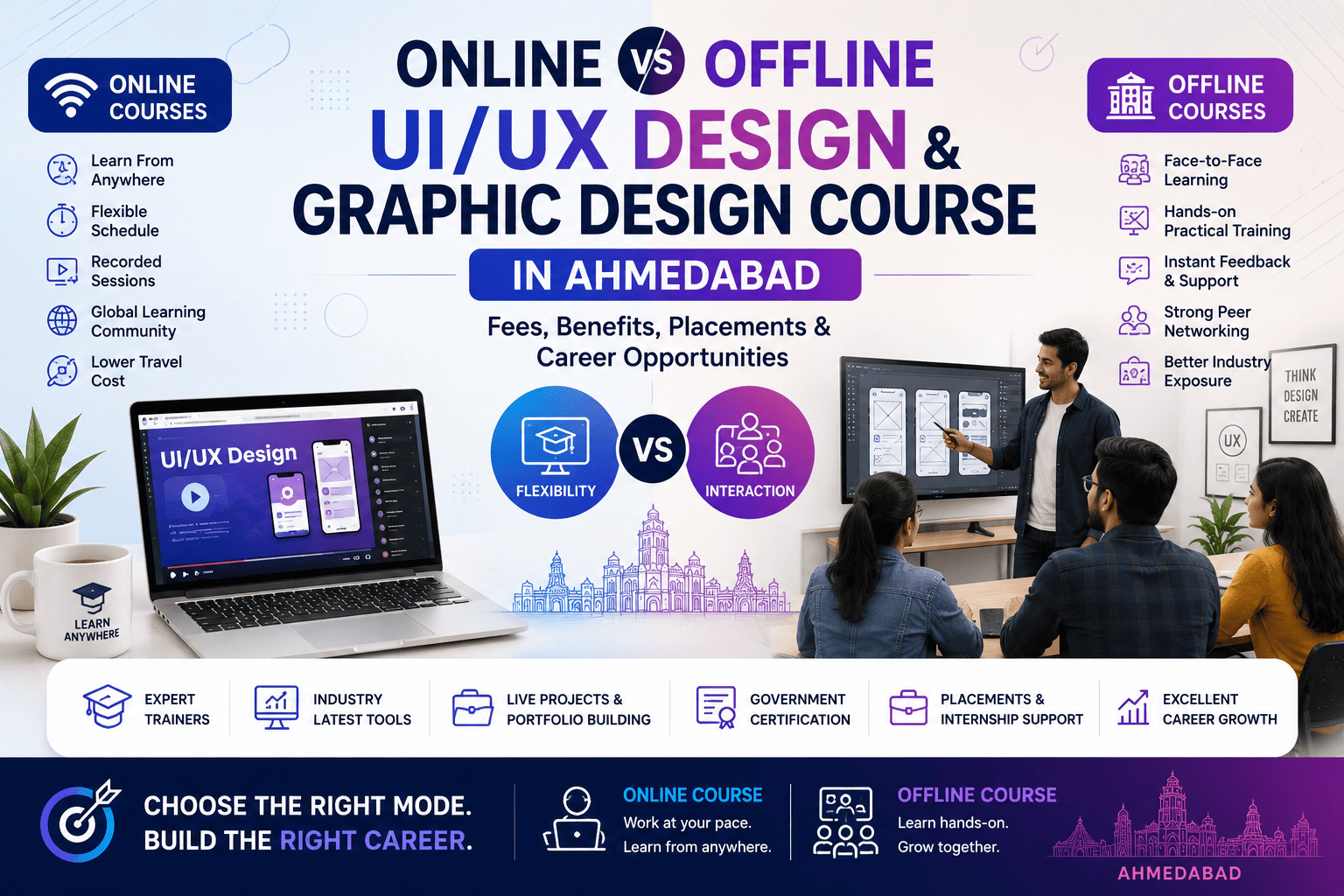
Online learning has become increasingly popular due to its flexibility.
Key Advantages
- Learn from anywhere
- Flexible schedules
- Recorded sessions
- Self-paced revision
- Access to digital resources
- Suitable for working professionals
- Lower travel costs
- Easy access to global learning communities
Online programmes are ideal for learners who are disciplined and comfortable managing their own schedules.
Offline UI/UX & Graphic Design Course Benefits
Classroom learning provides structured guidance and practical exposure.
Key Advantages
- Face-to-face interaction with mentors
- Immediate feedback on designs
- Better collaboration with classmates
- Dedicated lab sessions
- Regular project reviews
- Stronger networking opportunities
- Industry workshops
- Classroom discussions
- Better accountability
Offline learning often benefits beginners who prefer hands-on mentoring.
Which Mode Offers Better Practical Learning?
Practical experience is essential in design education.
Look for programmes that include:
- Live Industry Projects
- Real Client Assignments
- Portfolio Development
- Design Critiques
- Case Studies
- Internship Opportunities
- Software Practice
- Team Collaboration
Whether online or offline, the quality of practical training is more important than the delivery mode.
Course Syllabus: What Should You Learn?
A comprehensive course should cover both Graphic Design and UI/UX Design.
Graphic Design Modules
- Design Principles
- Colour Theory
- Typography
- Branding
- Logo Design
- Print Design
- Packaging Design
- Social Media Design
- Advertising Design
UI Design Modules
- Mobile App Design
- Website Design
- Responsive Layouts
- Design Systems
- Accessibility
UX Design Modules
- Design Thinking
- User Research
- Personas
- User Flows
- Information Architecture
- Wireframing
- Prototyping
- Usability Testing
Industry Software You Should Learn
A modern course should include practical training in:
- Adobe Photoshop
- Adobe Illustrator
- Adobe InDesign
- Figma
- Adobe XD
- FigJam
- Canva
- AI-Assisted Design Tools
Hands-on experience with these tools helps students meet industry expectations.
Fees: Online vs Offline Courses
Course fees vary depending on:
- Duration
- Curriculum
- Software Included
- Faculty Expertise
- Live Projects
- Certification
- Placement Support
Online programmes may have lower overall costs due to reduced infrastructure expenses, while offline programmes often include classroom facilities, lab access, and in-person mentoring. Instead of selecting a course based solely on price, compare the curriculum, practical learning opportunities, mentor support, and career services.
Placement Assistance: Which is Better?
Placement support depends more on the institute than the learning mode.
A quality institute should provide:
- Resume Building
- Portfolio Development
- Mock Interviews
- Career Counselling
- Internship Support
- Freelancing Guidance
- Placement Assistance
- Communication Skills Training
Institutes with strong industry networks and employer partnerships generally provide better placement opportunities.
Career Opportunities After the Course
Both learning modes can prepare you for careers such as:
- Graphic Designer
- UI Designer
- UX Designer
- Product Designer
- Visual Designer
- Brand Designer
- Interaction Designer
- Mobile App Designer
- Web Designer
- UX Researcher
- Creative Designer
- Freelance Designer
Your portfolio and practical skills will have the greatest impact on your employability.
Salary Expectations in India (2026)
Salary depends on experience, portfolio quality, technical skills, and employer.
| Experience | Graphic Design | UI/UX Design |
|---|---|---|
| Fresher | ₹2.5–5 LPA | ₹3–6 LPA |
| 1–3 Years | ₹4–8 LPA | ₹6–10 LPA |
| 3–5 Years | ₹7–12 LPA | ₹10–18 LPA |
| Senior Roles | ₹12 LPA+ | ₹18 LPA+ |
Professionals with expertise in Figma, UX research, prototyping, branding, and design systems often enjoy stronger career growth.
Who Should Choose an Online Course?
Online learning is suitable for:
- Working Professionals
- Freelancers
- Entrepreneurs
- Remote Learners
- Individuals with Busy Schedules
- Students Seeking Flexible Learning
Who Should Choose an Offline Course?
Offline learning is ideal for:
- Freshers
- Students After Class 10 or 12
- College Students
- Beginners
- Career Changers
- Learners Who Prefer Classroom Interaction
- Individuals Seeking Regular Mentor Guidance
Government Certification: Why It Matters
Government-recognised certification can strengthen your profile by demonstrating structured training.
Benefits include:
- Greater credibility
- Improved resume value
- Better internship opportunities
- Industry recognition
- Increased employer confidence
Certification should be paired with practical projects and a strong portfolio to maximise career prospects.
How to Choose the Best Design Institute in Ahmedabad
Before enrolling, compare institutes based on:
✅ Updated Industry Curriculum
✅ Experienced Faculty
✅ Graphic Design + UI/UX Training
✅ Practical Learning
✅ Live Projects
✅ Portfolio Development
✅ Industry Software
✅ Government Certification
✅ Internship Opportunities
✅ Placement Support
Choose an institute that focuses on real-world skills rather than theory alone.
Frequently Asked Questions (FAQs)
1. Which is better: an online or offline UI/UX Design course?
Both can be effective. Online courses offer flexibility, while offline courses provide direct mentoring, classroom interaction, and structured practical learning.
2. Which mode is better for Graphic Design?
Beginners often benefit from offline classes because they receive immediate feedback and hands-on guidance. Experienced learners may also succeed through high-quality online programmes.
3. Are online certificates accepted by employers?
Employers generally value recognised certifications, but they place greater emphasis on your portfolio, practical skills, and ability to solve design problems.
4. Is placement assistance available for online students?
Many institutes offer online placement support, including resume reviews, interview preparation, and career guidance. Availability depends on the provider.
5. Which software should I learn?
Industry-standard tools include Adobe Photoshop, Illustrator, InDesign, Figma, Adobe XD, FigJam, and Canva.
6. Can working professionals learn UI/UX online?
Yes. Online programmes with flexible schedules are particularly suitable for working professionals looking to upskill or change careers.
7. Is practical learning more important than certification?
Yes. Employers typically evaluate portfolios, live projects, design thinking, and practical skills alongside certification.
8. Can I learn both Graphic Design and UI/UX together?
Yes. Many modern institutes offer integrated programmes that combine both disciplines, providing broader career opportunities across branding, digital marketing, and product design.
Conclusion
Choosing between an Online and Offline UI/UX Design & Graphic Design Course in Ahmedabad depends on your learning preferences, availability, and career objectives. Online courses provide flexibility and convenience, while offline programmes offer structured mentoring, collaborative learning, and classroom-based practical experience.
Regardless of the learning mode, the most important factors are a well-designed curriculum, hands-on projects, portfolio development, experienced trainers, government-recognised certification, and dedicated placement support. By selecting a programme that prioritises practical skills and industry readiness, students and working professionals can build rewarding careers in Graphic Design, UI Design, UX Design, and digital product development.